

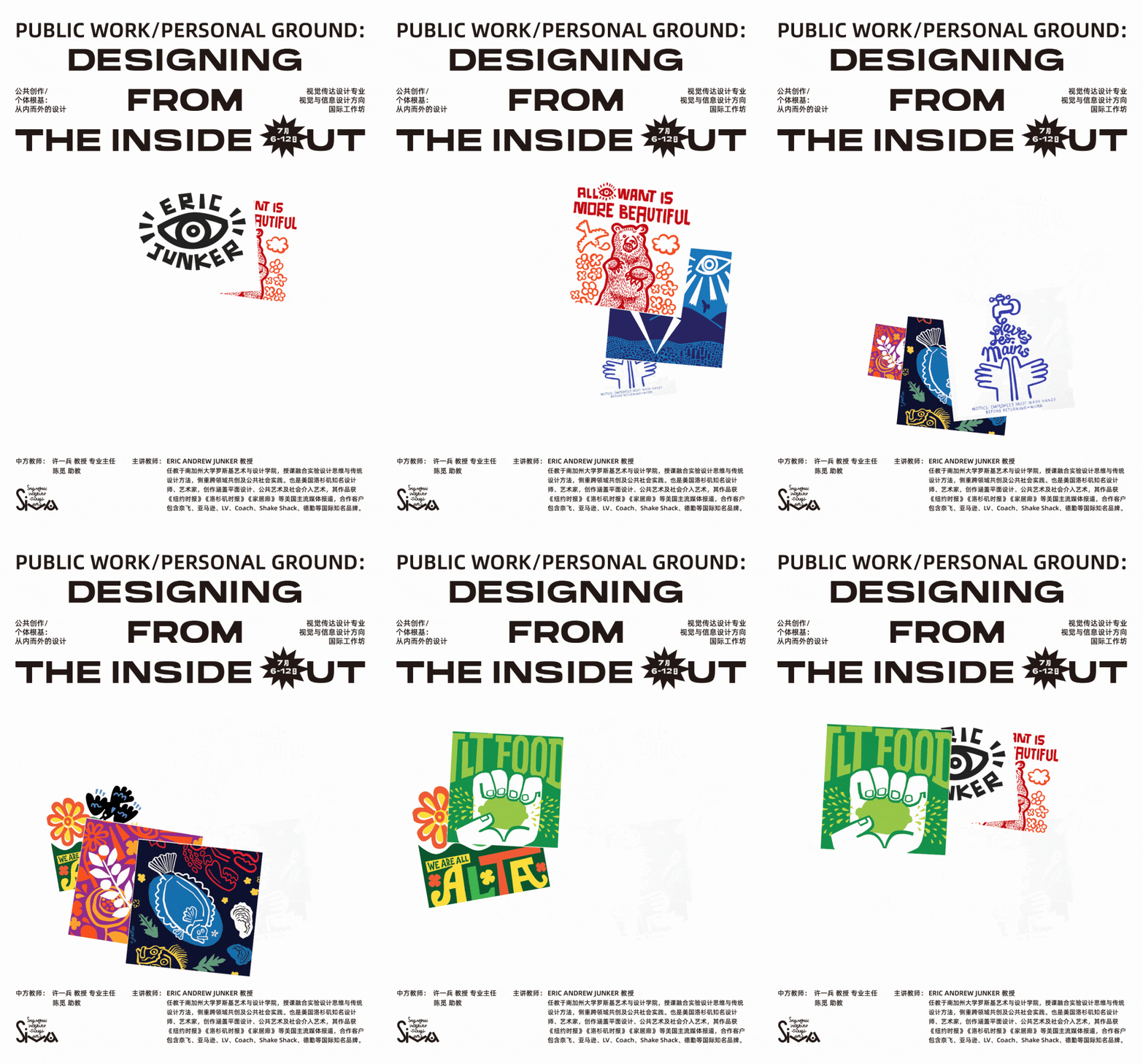
2026年7月6日至12日,未来设计学院视觉传达设计专业(视觉与信息设计方向)举办《公共创作 / 个体根基:由内而外的设计》国际大师工作坊。工作坊由南加州大学罗斯基艺术与设计学院Eric Andrew Junker教授主讲,围绕上海快速城市化进程中的空间关系、身份经验与自然环境议题展开,通过案例解析、实地调研、符号实验、协作讨论与作品迭代等教学环节,引导学生从个人生活经验与在地记忆出发,完成大幅面视觉设计创作。
From July 6 to 12, 2026, the Visual Communication Design program (Visual and Information Design track) of the School of Future Design hosted the international master workshop “Public Art / Individual Roots: Design from the Inside Out.” Led by Professor Eric Andrew Junker of the USC Roski School of Art and Design, the workshop examined spatial relations, identity experience, and the natural environment in the context of Shanghai’s rapid urbanization. Through case analysis, field research, symbolic experimentation, collaborative critique, and iterative development, students translated personal experience and local memory into large-format visual design works.
主讲教师与课程议题:从公共艺术实践到个体视觉表达

Eric Andrew Junker教授长期从事公共艺术、壁画与跨媒介视觉设计实践,并具有丰富的国际教学经验。其大型壁画及公共艺术项目分布于美国、墨西哥等地区,合作对象涵盖Louis Vuitton、Coach、Netflix、Patagonia、Target、洛杉矶爱乐乐团与Deloitte等机构和品牌。其相关创作曾获《纽约时报》《洛杉矶时报》《Elle Décor》《福布斯》及Bloomberg CityLab等媒体关注,并由CBS、ABC、NBC等电视媒体报道。上述实践经验为本次工作坊关于公共空间、视觉符号与个体叙事的教学提供了案例基础。
Professor Eric Andrew Junker has extensive experience in public art, mural practice, cross-media visual design, and international teaching. His large-scale murals and public art projects have been realized across the United States and Mexico, and his collaborators have included Louis Vuitton, Coach, Netflix, Patagonia, Target, the Los Angeles Philharmonic, and Deloitte. His work has received coverage from The New York Times, Los Angeles Times, Elle Décor, Forbes, Bloomberg CityLab, CBS, ABC, and NBC. This professional background provided a substantial case base for the workshop’s investigation of public space, visual symbols, and personal narrative.
基础训练:肖像观察与集体图像实验


7月6日上午,许一兵教授致开场辞。Junker教授随后介绍个人创作实践与代表性项目,并组织肖像拍摄训练。学生以未曾合作过的同学为采访对象,根据采访内容从构图、色彩、背景、裁切、道具、视线、光线与表情八项视觉变量中选取三项进行拍摄。完成后,全部肖像被打印并集中展示,师生围绕视觉选择、信息传达与画面关系展开集体评议。
评议过程中,Junker教授强调,设计汇报应建立在明确的创作意图与可论证的视觉决策基础上。创作者需要说明每一项形式选择与表达目标之间的关系,并对构图、媒介和符号使用承担解释责任。
On the morning of July 6, Professor Xu Yibing delivered the opening remarks. Professor Junker then introduced his professional practice and representative projects before organizing a portrait exercise. Working with classmates they had not previously collaborated with, students selected three variables from composition, color, background, cropping, props, gaze, lighting, and facial expression to structure their photographs. The resulting portraits were printed and displayed for a collective critique focused on visual decision-making, communication, and compositional relationships.
During the critique, Professor Junker emphasized that design presentations should be grounded in explicit intentions and defensible visual decisions. Creators must be able to explain how formal choices support communicative objectives and take responsibility for the use of composition, media, and symbols.


当日下午,课程转入图像绘画。每位学生首先独立绘制20张面孔,并通过张贴与讨论检验图形差异;随后,全班共同完成504张人脸图像,综合运用不同材料、工具与绘画方法。该环节以重复生产、材料实验和集体比较为主要方法,旨在降低学生对单一方案的依赖,拓展视觉生成的可能性。
In the afternoon, the course shifted to an intensive image-generation exercise. Each student first produced 20 faces independently and evaluated their differences through display and discussion. The class then collaboratively created 504 facial images using varied materials, tools, and drawing methods. Through repetition, material experimentation, and comparative review, the exercise encouraged students to move beyond dependence on a single solution and expand the range of possible visual outcomes.
符号研究:从案例分析到个人视觉语汇
7月7日上午,Junker教授以“当作品呈现在户外大型媒介中时,创作者希望传达什么”为问题,引导学生明确个人表达的核心议题。随后,他以SIVA壁画项目为案例,分析创作如何借鉴陕北剪纸艺术家郭如林的形式语言,并将个人长期使用的“鸟”形符号纳入公共壁画体系。同时,课程讨论了数字、文化象征与视觉叙事之间的关系,帮助学生理解符号并非单纯装饰,而应具有可追溯的文化语境与表达依据。
On the morning of July 7, Professor Junker asked students to consider what they would communicate if their work were presented on a large outdoor display. He then analyzed his SIVA mural project, explaining how its visual language drew on the work of Northern Shaanxi paper-cut artist Guo Rulin while incorporating his recurring bird motif. The session also examined relationships among numbers, cultural symbolism, and visual narrative, emphasizing that symbols should function as contextually grounded carriers of meaning rather than as decoration alone.


在此基础上,学生分别阐释个人符号的来源与意义,并开展20组符号变体实验。Junker教授建议从形态、轮廓、材质和非常规视角四个维度建立变化机制,同时通过艺术家案例检索扩展参照范围。一对一辅导强调避免将主体机械地置于画面中心,应通过抽象化、尺度变化与构图偏移强化视觉关系。随后,学生以小组评议方式比较各版本的识别度、独特性与延展潜力,并据此继续修订。
Students subsequently articulated the sources and meanings of their personal symbols and developed 20 variations. Professor Junker proposed four dimensions for systematic exploration: form, contour, material, and unconventional viewpoint. Individual tutorials emphasized avoiding the mechanical placement of subjects at the center of the composition and using abstraction, scale shifts, and spatial displacement to strengthen visual relationships. Group critiques then compared the recognizability, distinctiveness, and developmental potential of each version, providing a basis for further revision.
田野观察:自然元素的采集与语义转化


7月8日,课程转入校园实地观察。学生通过摄影与速写采集植物、动物及环境形态,并记录其生长结构、形态特征与文化联想。Junker教授强调,素材选择应建立在明确的语义判断之上,避免仅凭形式偏好进行随机拼接。返回教室后,学生将个人符号与自然元素进行组合实验,通过小组讨论检验二者在意义、形态与构图层面的关联,为后续作品深化建立素材与结构基础。
On July 8, the course moved into field observation across the campus. Students documented plants, animals, and environmental forms through photography and sketching, recording structural characteristics, growth patterns, and cultural associations. Professor Junker emphasized that material selection should be based on explicit semantic judgment rather than arbitrary formal preference. Back in the studio, students combined personal symbols with natural elements and used group critique to evaluate their relationships in meaning, form, and composition, establishing a material and structural foundation for subsequent development.
方法深化:解构、拼贴与构图迭代

7月9日,课程进入作品深化阶段。部分方案虽已形成相对完整的视觉结构,但在构图层级、信息密度与形式突破方面出现趋同。针对这一问题,课程将评价重点由“完成度”转向“方案差异与结构有效性”,要求学生重新检视已有成果,而非沿用既定路径进行表层修饰。
Junker教授通过一对一辅导分析各方案的视觉重心、节奏与信息组织,并要求学生从多轮草图中选取三个版本进行打印。随后,学生对图像进行裁切、拆分与重新组合,以“解构—重构”的方式测试不同局部之间的关系,从而打破原有构图惯性。
完成拼贴实验后,新方案与原A3草图被并置展示。学生通过横向比较重新评估画面的疏密、尺度、节奏、留白与视觉中心,并依据评议结果确定最终构图。该环节将偶然性材料操作转化为可观察、可比较的设计研究方法,强化了迭代过程中的证据意识。
On July 9, the workshop entered the development stage. Although several proposals had already achieved a relatively complete visual structure, they showed limitations in hierarchy, information density, and formal differentiation. The evaluation focus therefore shifted from surface completion to structural effectiveness and variation among alternatives, requiring students to reassess existing outcomes rather than merely polish established solutions.
Through individual tutorials, Professor Junker analyzed visual focus, rhythm, and information organization in each proposal. Students selected three versions from their iterative drafts, printed them, and then cut, fragmented, and recombined the images. This process of deconstruction and reconstruction was used to test relationships among visual components and disrupt habitual compositional patterns.
The resulting collages were displayed alongside the original A3 drafts. Through comparative review, students reassessed density, scale, rhythm, negative space, and focal structure before determining their final compositions. The exercise transformed materially contingent operations into an observable and comparable design-research method, strengthening evidence-based decision-making within the iterative process.
成果展示:过程呈现与综合评议


7月10日上午,工作坊成果展在学校图文信息中心举行。展览集中呈现学生一周内完成的调研记录、手绘草图、打样方案、拼贴实验与最终大幅面作品。Junker教授结合前期过程材料对作品逐一评议,重点讨论概念来源、符号转化、构图逻辑与迭代依据,并对课程方法进行总结。
On the morning of July 10, the workshop exhibition was held at the university’s Graphic and Information Center. The display brought together research records, hand-drawn sketches, mock-ups, collage experiments, and final large-format works produced during the week. Drawing on the process materials, Professor Junker reviewed each project with particular attention to conceptual origins, symbolic transformation, compositional logic, and the rationale for iteration, before summarizing the workshop methodology.


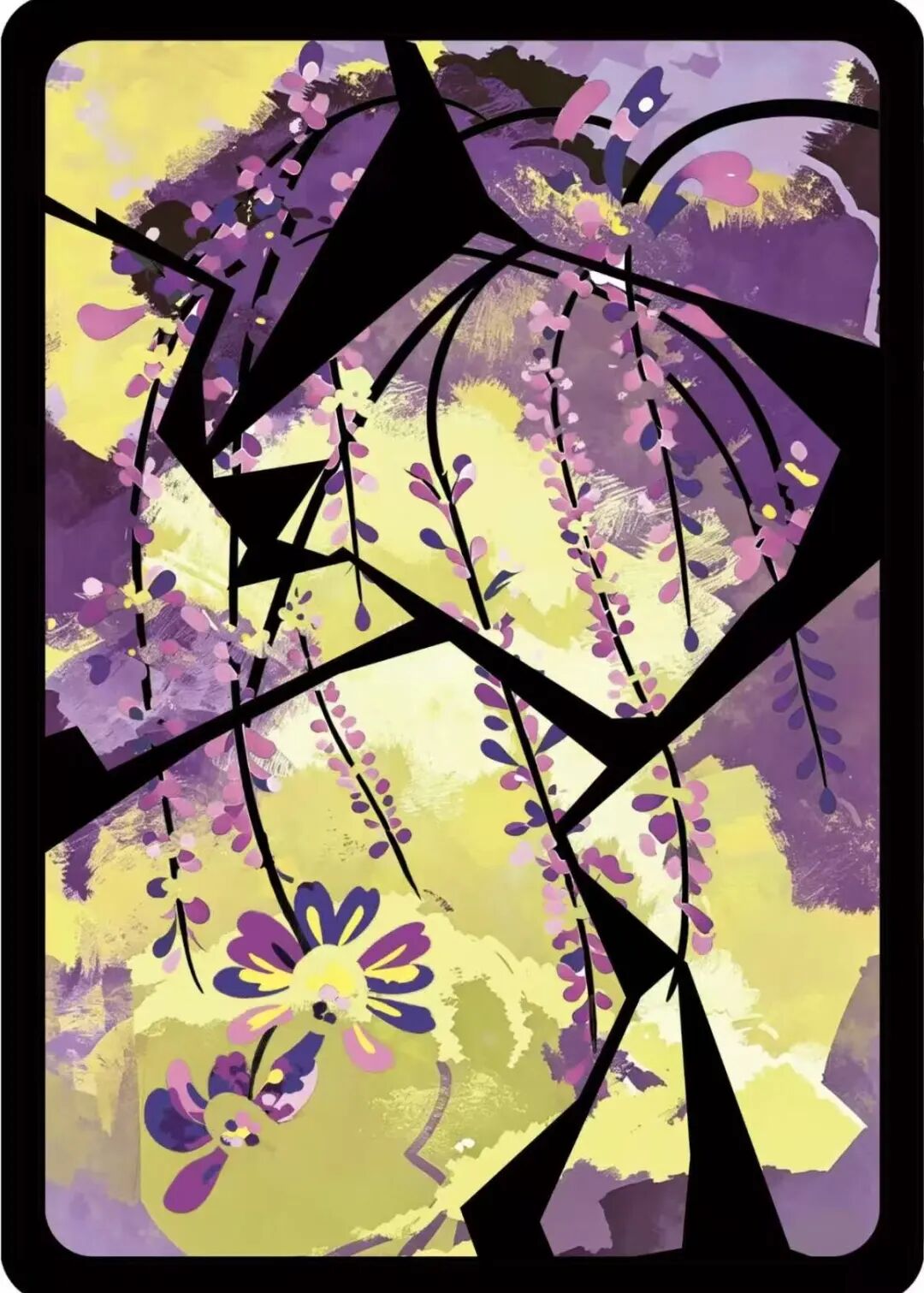


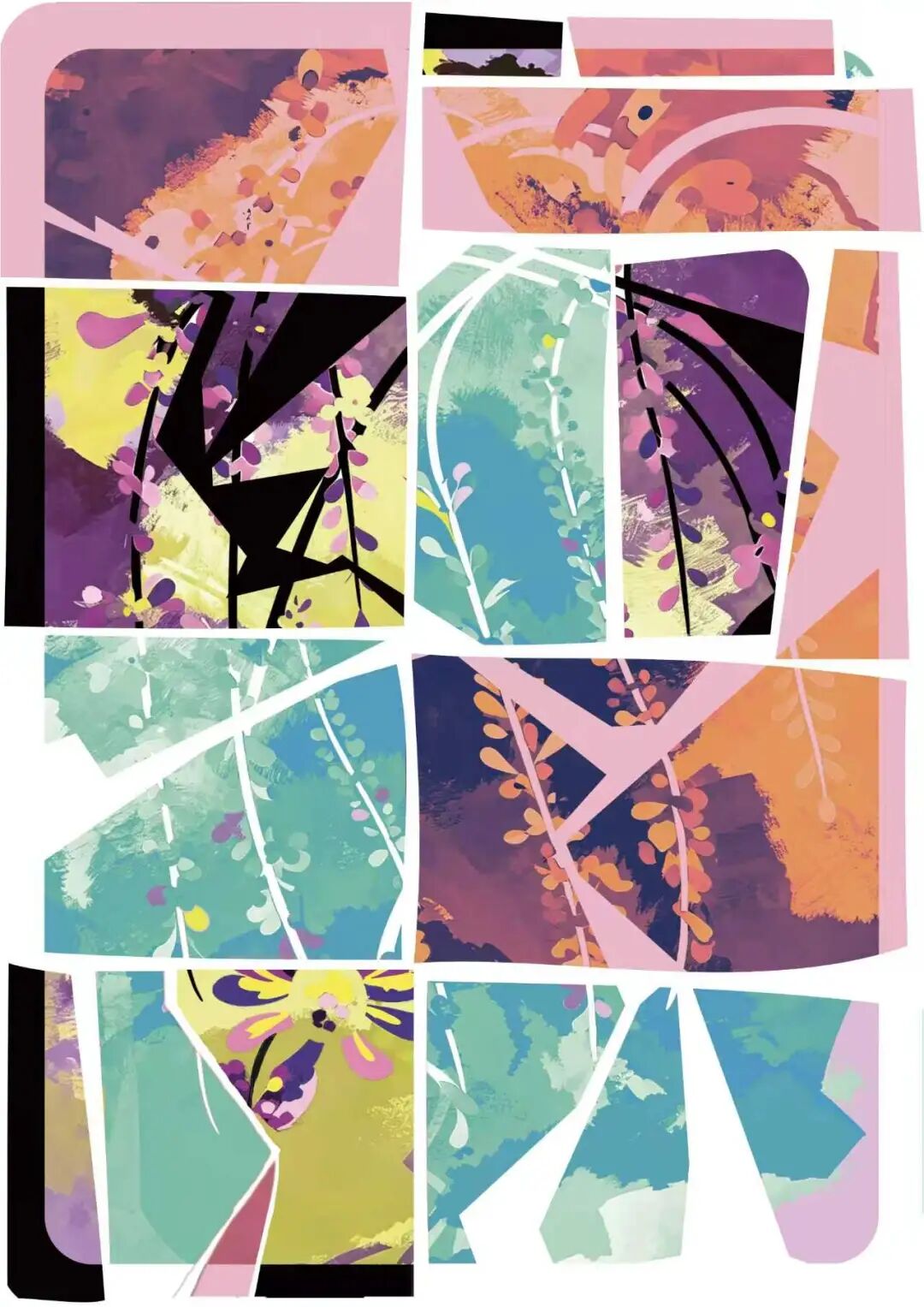

在一组以“碎裂屏幕”为个人物品线索的方案中,学生尝试将屏幕裂纹与自然藤蔓结合,以讨论技术媒介与自然生长之间的张力。Junker教授首先要求学生明确物品选择与个人经验之间的关系,随后围绕裂纹结构、色彩明度与不同配色组合提出修订建议。经过第二、第三轮迭代,方案逐步建立了较清晰的形式秩序。第四轮实验将不同版本裁切并重新组合,使“碎裂”由单一图形特征转化为整体构图机制,同时增加了色彩层次,最终成为定稿的主要依据。
该案例表明,作品深化并不等同于持续增加元素。留白、信息密度、形式节制以及多方案比较同样构成设计判断的重要部分。通过连续试验与针对性评议,学生进一步认识到,设计质量取决于问题界定、参照扩展和迭代证据,而非单次灵感或局部装饰。
In one project based on the personal object of a shattered screen, the student combined screen fractures with natural vines to examine the tension between technological media and organic growth. Professor Junker first asked the student to clarify the relationship between the selected object and personal experience, and then proposed revisions concerning fracture structure, tonal value, and color combinations. Across the second and third iterations, the work developed a clearer formal order. In the fourth experiment, fragments from different versions were cut and recombined, transforming fracture from a single motif into an overall compositional mechanism while enriching the color structure. This process became the principal basis for the final work.
The case demonstrated that development does not simply mean adding more elements. Negative space, information density, formal restraint, and comparison among alternatives are equally important components of design judgment. Through sustained experimentation and targeted critique, the student recognized that design quality depends on problem definition, expanded references, and evidence generated through iteration rather than on isolated inspiration or decorative detail.
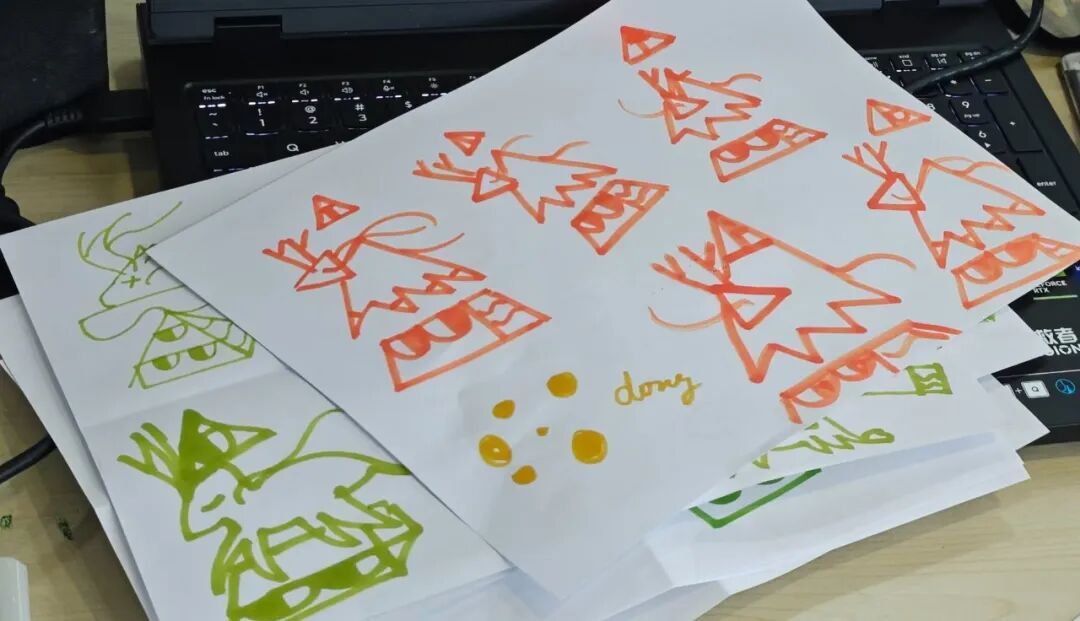
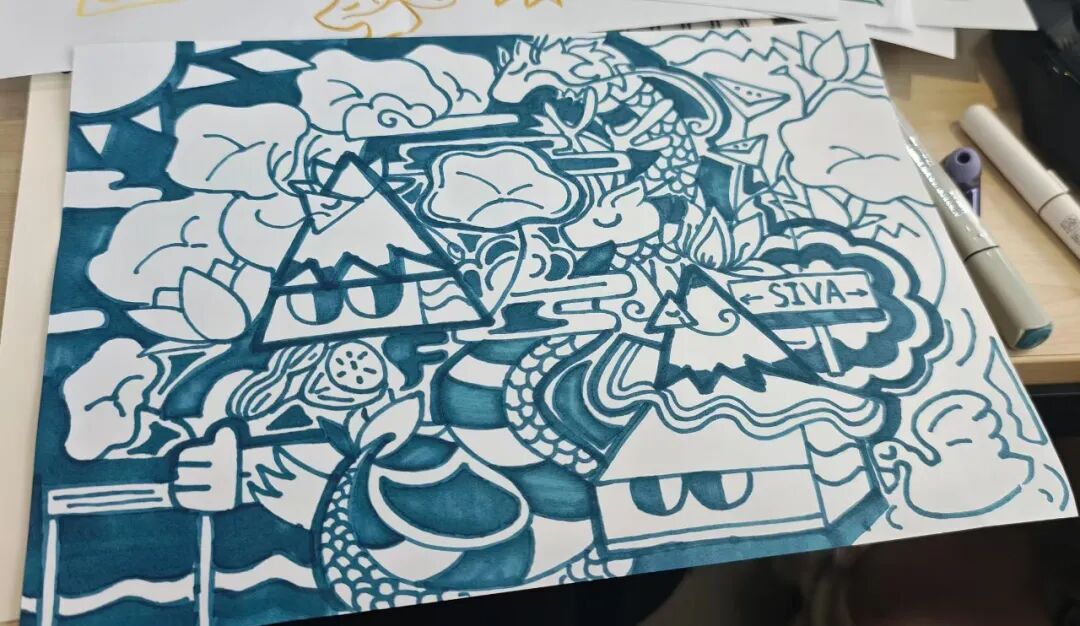

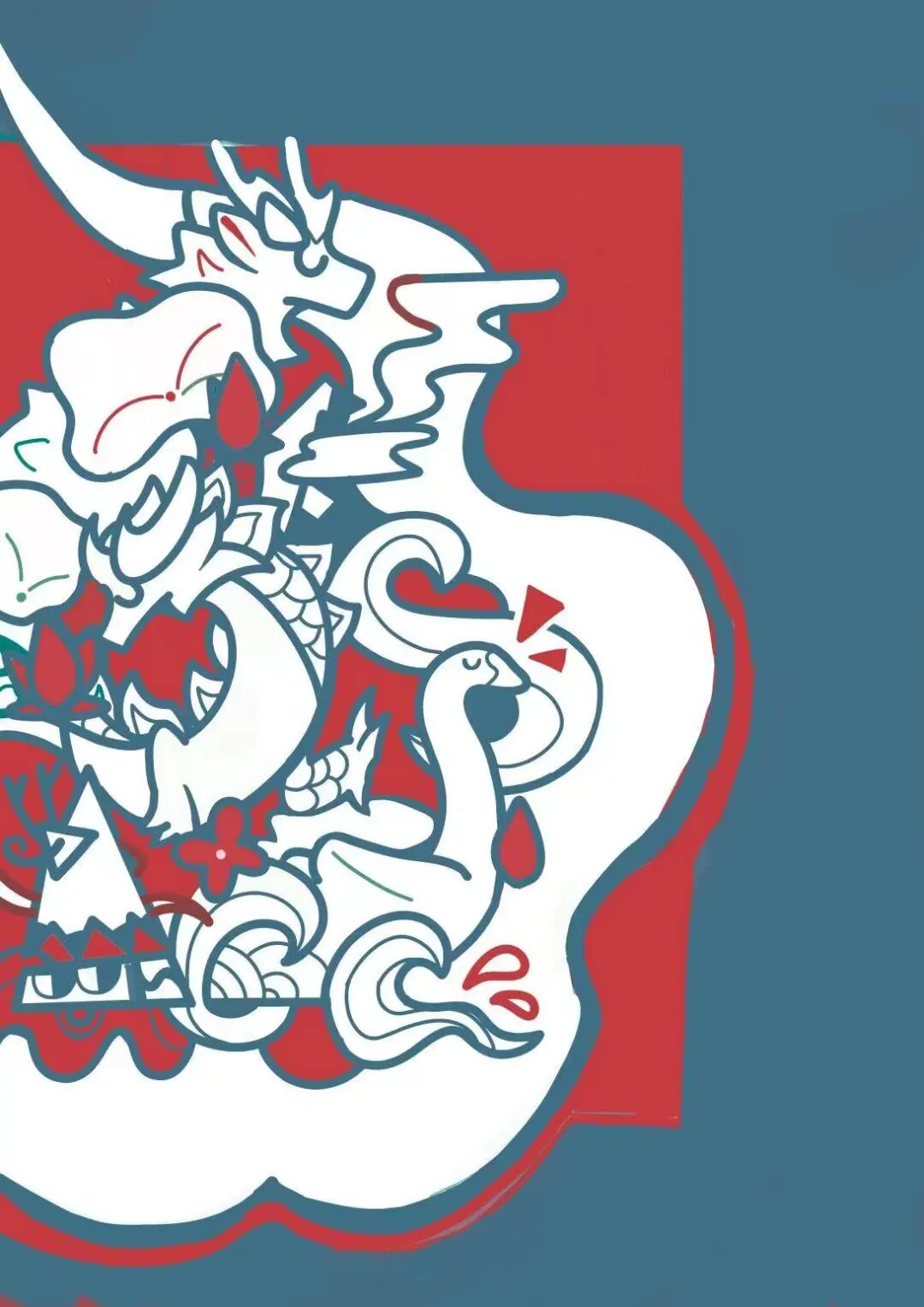


另一组方案在初稿中出现元素数量过多、视觉层级不清以及局部风格不一致等问题。Junker教授据此建议调整画幅尺度,减少非必要信息,并重新组织主体与辅助元素之间的关系,以提升整体识别度与形式统一性。
学生随后扩大画布并调整配色,以中国古代壁画的低明度色彩关系作为参照,建立更为稳定的整体氛围。课程辅导中,Junker教授分享了个人荷花主题作品,学生据此提取小型花卉形态作为辅助元素,用于补充局部节奏,而非形成新的视觉中心。
在后续迭代中,学生通过镜像、对称复制、纹理叠加与局部细化等方式比较不同构图效果,并持续调整麒麟、石块及装饰纹样之间的主次关系。最终方案在保留个人视觉符号的同时,提高了画面留白、元素整合与节奏控制的有效性。该过程进一步验证了“减少”同样是一种主动的设计方法。
Another proposal initially contained an excessive number of elements, unclear hierarchy, and inconsistent local styles. Professor Junker therefore advised the student to adjust the canvas scale, remove nonessential information, and reorganize the relationship between primary and supporting elements in order to improve legibility and formal coherence.
The student enlarged the canvas and revised the color system, drawing on the low-value chromatic relationships of ancient Chinese mural painting to establish a more stable overall atmosphere. During the tutorial, Professor Junker shared examples from his lotus-themed work. The student extracted small floral forms as secondary elements to support local rhythm rather than create an additional focal point.
In subsequent iterations, the student compared compositional effects through mirroring, symmetrical duplication, texture overlays, and local refinement, while continually adjusting the hierarchy among the qilin, stones, and decorative patterns. The final proposal retained the student’s personal visual symbol while improving negative space, integration, and rhythmic control. The process further demonstrated that reduction can function as an active design method.
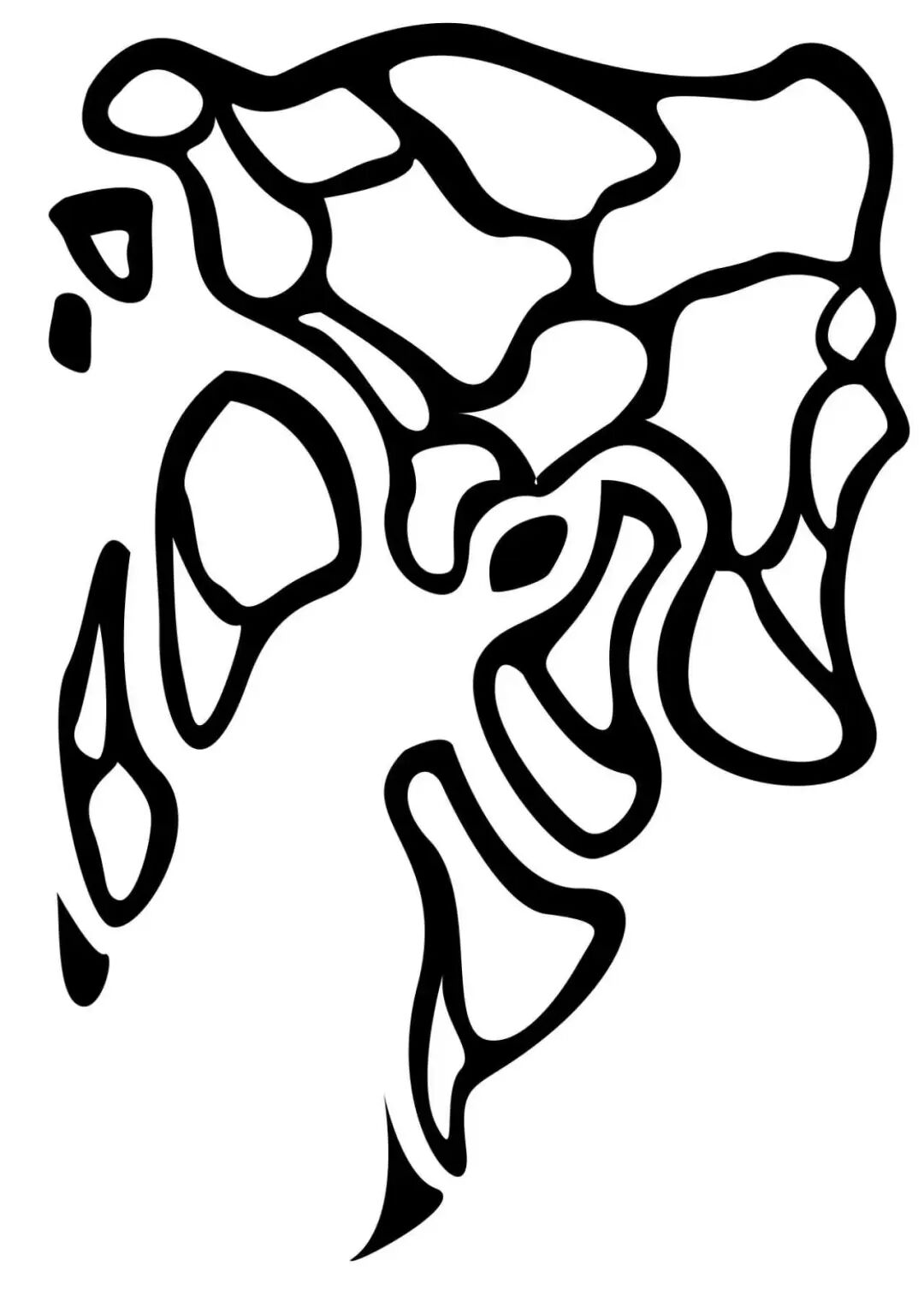



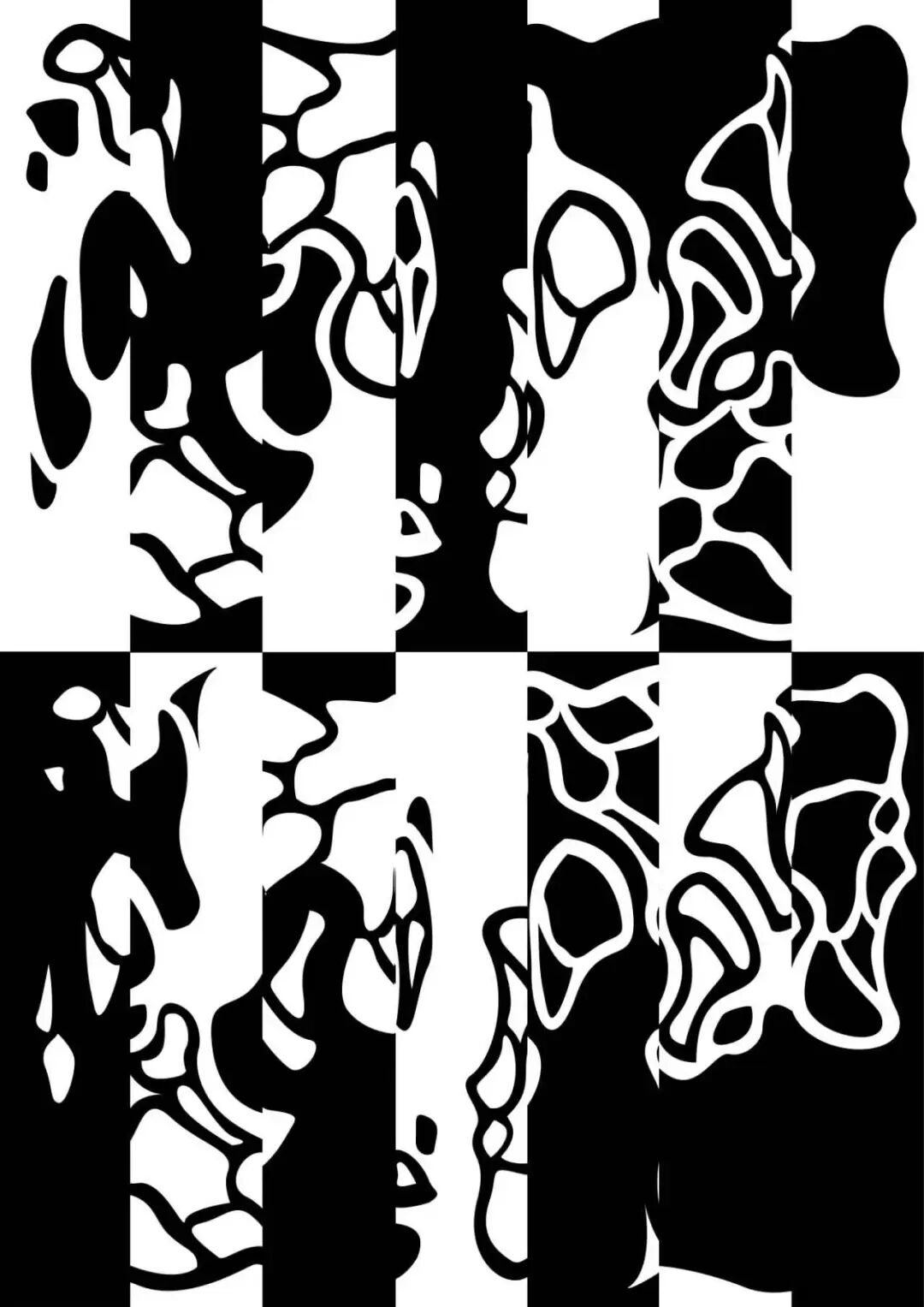
在水母主题方案中,学生希望同时呈现水母的柔软、梦幻与潜在毒性,但初期配色未能建立清晰的情绪指向。Junker教授建议同步测试彩色、黑白及线内填色等多种版本,以比较色彩介入对形态识别和情感表达的影响。多组方案上墙后,学生发现并置展示能够形成更丰富的视觉关系。教授进一步以Andy Warhol的重复构图为参照,引导学生测试四联组合及不同排列方式。
在后续裁切实验中,学生将作品等分为七条并采用反向拼接,强化了水母形态的流动性与不稳定感。经比较,黑白版本在结构识别与主题表达方面更为集中,因此被确定为最终方案。
In the jellyfish project, the student sought to communicate softness, dreamlike movement, and latent toxicity, but the initial color studies did not establish a clear emotional direction. Professor Junker recommended testing color, black-and-white, and line-filled variations in parallel to compare how chromatic intervention affected formal recognition and emotional expression. When multiple studies were displayed together, their juxtaposition generated a richer visual relationship. Using Andy Warhol’s repetitive compositions as a reference, the student then tested four-panel groupings and alternative arrangements.
In subsequent cutting experiments, the students divided their work into seven equal strips and assembled them in reverse order, thereby emphasizing the jellyfish’s fluidity and sense of instability. Upon comparison, the black-and-white version was found to be more focused in terms of structural clarity and thematic expression, and was therefore selected as the final design.
课程总结

本次《公共创作/ 个体根基:由内而外的设计》国际大师工作坊以个人经验向公共表达的转化为核心,构建了由观察训练、批量图像生成、符号研究、田野采集、拼贴实验到大幅面呈现的递进式教学流程。课程将案例分析、材料实验、同伴评议与一对一辅导相结合,使学生在持续比较与修订中理解视觉符号的语义基础、构图组织与公共传播条件。Junker教授的公共艺术与跨媒介实践为课程提供了具体参照,也使学生得以从个体叙事出发,进一步讨论城市空间、自然环境与人工系统之间的关系。
本次工作坊是未来设计学院推进国际化、跨文化设计教学的一次实践。学院将继续通过国际课程、协同教学与项目制研究,完善视觉传达设计专业的实践教学体系,为学生提升研究意识、系统设计能力与跨文化沟通能力提供支持。
The international master workshop “Public Art / Individual Roots: Design from the Inside Out” centered on translating personal experience into public expression. It established a progressive teaching sequence encompassing observational training, high-volume image generation, symbol research, field collection, collage experimentation, and large-format presentation. By integrating case analysis, material experimentation, peer critique, and individual tutorials, the workshop enabled students to examine the semantic basis of visual symbols, compositional organization, and the conditions of public communication through sustained comparison and revision. Professor Junker’s practice in public art and cross-media design provided concrete references for students to investigate relationships among urban space, the natural environment, and artificial systems from the perspective of personal narrative.
The workshop constituted a practical initiative in the School of Future Design’s development of international and cross-cultural design education. The School will continue to strengthen its practice-based curriculum through international courses, collaborative teaching, and project-oriented research, supporting students in developing research awareness, systematic design capability, and cross-cultural communication skills.


